

If you live in India, you know the struggle: humidity, pollution, and the midday shine that makes your face look like a frying pan. For those of us with oily skin, "open pores" aren't just a texture issue; they are magnets for dirt and acne.
The market is flooded with solutions from harsh acids to silicone primers. But lately, the spotlight has returned to a natural powerhouse: Tea Tree. specifically, formulations like the Tea Tree Pore Cream. But is it actually better than clinical actives like Salicylic Acid or Niacinamide? Let’s break it down.
The "Open Pore" Dilemma: Why It Happens
Pores don't open and close like doors. They stretch. When your sebaceous glands overproduce oil (common in the Indian climate), it mixes with dead skin and stretches the pore walls.
To fix this, you need a pore minimizing cream that does two things:
- Regulates oil production.
- Tightens the appearance of the skin texture.
The Showdown: Tea Tree vs. The Competition
Let’s compare the Tea Tree Face Cream approach against other popular ingredients found in creams for open pores.
1. Tea Tree vs. Salicylic Acid
- Salicylic Acid: Excellent for deep cleaning, but can be incredibly drying. In the harsh Indian summer, using strong acids daily can damage your moisture barrier, leading to even more oil production as a defense mechanism.
- Tea Tree: A natural antibacterial and astringent. It reduces sebum without stripping the skin entirely. It strikes the perfect balance for an oily skin cream in India tough on grease, gentle on the barrier.
2. Tea Tree vs. Silicones
- Silicones: Most "pore blurring" primers use silicones to fill in holes. This is a cosmetic fix, not a treatment. It can also trap bacteria inside, causing breakouts.
- Tea Tree: Actually treats the underlying cause (excess oil and inflammation) rather than just masking the texture.
3. Tea Tree vs. Heavy Moisturizers
- While dry skin types might look for the best moisturizing cream loaded with ceramides and oils, oily skin needs hydration without the weight. Tea tree formulations are typically lightweight and absorb instantly.
Why The Face Shop Tea Tree Pore Cream Stands Out
Not all tea tree products are created equal. Some are too potent and burn; others are diluted.
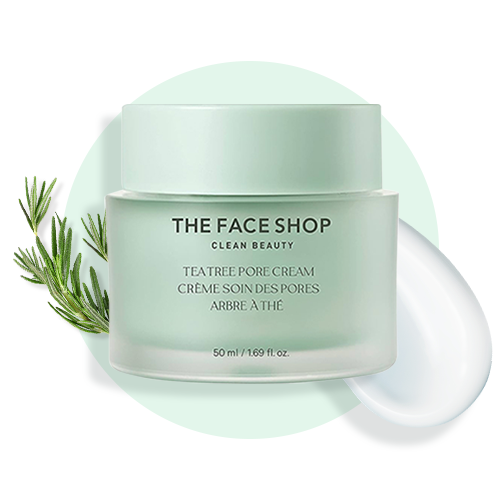
Tea Tree Pore Cream 50ml has become a cult favorite for a reason. It uses low-temperature extraction technology to preserve the purity of the tea tree extract.
Key Benefits:
- Texture: It is a lightweight gel-cream hybrid, crucial for avoiding that sticky feeling.
- Triple Action: It hydrates, controls sebum, and minimizes the look of pores simultaneously.
- Clean Formulation: Free from 13 harmful additives, making it the best pore cream for sensitive-oily skin types.
The Ideal Routine for Minimizing Pores
A cream acts best when the canvas is clean. Here is a dermatologist-approved 3-step routine:
- Cleanse Deeply: You need to remove the gunk first. Start with a dedicated wash like the Tea Tree Pore Clarifying Gel Cleanser 150ml. If you wear heavy makeup, consider double cleansing with oil-based facial cleansers before your water-based wash.
- Tone: Use toner pads to wipe away residual dirt and tighten the skin.
- Treat & Hydrate: Apply a dime-sized amount of The Face Shop Cream. Pat it in don't rub to help it absorb into the pores.
FAQ: Common Questions About Pore Creams
Q: Can I use Tea Tree Pore Cream every day?
A: Yes. Unlike high-percentage acid creams, this Tea Tree Face Cream is designed for daily AM and PM use. It hydrates while it treats.
Q: Will this cream dry out my skin?
A: No. It is formulated with Pro-panthenol to ensure your skin stays hydrated. It targets excess oil, not your skin's essential moisture.
Q: Is it suitable for acne-prone skin?
A: Absolutely. Tea tree is naturally anti-inflammatory, making this an excellent choice for Tea Tree Oily Skin types prone to breakouts.
Conclusion
If you are tired of harsh chemicals that leave your skin red or silicones that clog your pores, it is time to switch to nature’s best astringent. The Tea Tree Pore Cream offers the efficacy of a clinical treatment with the gentleness of a daily moisturizer.